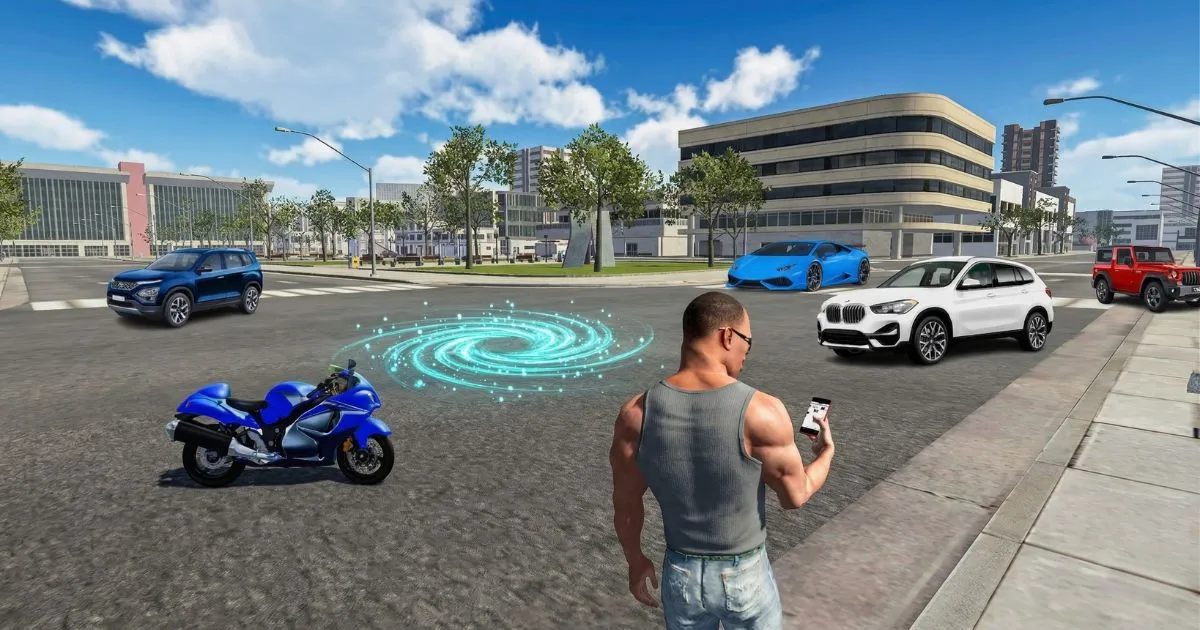
Missions are the backbone of Indian Bike Driving 3D's progression system. Whether you are delivering packages across the city, racing through checkpoints, or completing timed challenges, each mission type has its own demands and strategies. This guide covers everything you need to know to complete missions consistently and efficiently — from pre-mission preparation to advanced routing techniques.
Types of Missions in Indian Bike Driving 3D
Indian Bike Driving 3D features several different mission categories, each requiring a slightly different approach. Understanding what each type demands before you start is the first step to completing them successfully.
Delivery missions ask you to pick up a package or passenger from one location and bring them to a destination within a time limit. These are the most common mission type and form the core of the game's progression. Success depends on route knowledge, traffic management, and carrying consistent speed without crashing.
Checkpoint missions place a series of markers around the map that you must ride through in sequence. These are essentially time trials — your goal is to hit each checkpoint in order as quickly as possible. The challenge comes from the fact that checkpoints are not always placed on obvious optimal routes, so learning the checkpoint sequence in advance pays dividends.
Timed challenge missions give you a set amount of time to accumulate distance, reach a target score, or achieve a specific objective. These are more open-ended than delivery or checkpoint missions and reward creative use of the map and your vehicle's capabilities.
Pre-Mission Preparation
The biggest improvement most players can make to their mission success rate costs zero skill — it is simply taking thirty seconds before each mission to look at the route on the minimap and form a rough mental picture of where you are going. Players who begin riding immediately after accepting a mission often take inefficient routes or miss turns because they are reacting to GPS prompts too late.
Before accepting a mission, check which vehicle you are currently riding. For most delivery and checkpoint missions, a fast motorcycle is the best choice. Use feature code 7000 to spawn the Hayabusa or 3000 for the Kawasaki Ninja H2R — both are excellent mission vehicles that combine high speed with enough handling to weave through city traffic. If you are attempting a mission that traverses rough terrain or off-road sections, a more versatile vehicle may serve you better.
Also check your current health status if the mission involves potential collision damage. Using feature code 9129 for Infinity Health removes damage from the equation entirely, letting you focus purely on speed and routing rather than worrying about crashes damaging your vehicle.
Route Planning and Traffic Management
Indian Bike Driving 3D's city has main roads and side streets. Main roads are wider and faster in clear conditions, but they carry the most NPC traffic. Side streets are narrower but often have lighter traffic and can offer more direct routes between certain points on the map. Learning when to use each is one of the higher-level skills in mission play.
For delivery missions in heavy traffic, cutting through side streets can save significant time even if the route looks longer on the minimap. A slightly longer route through light traffic will often be faster than a direct route through gridlocked main road traffic. The key is knowing which side streets connect to where — something that only comes from exploring the map during free ride sessions.
When approaching intersections, scan ahead using the minimap for traffic clusters. If you see a buildup ahead, consider an alternate route before you reach it — changing course early costs far less time than slowing to a crawl through stopped traffic. The minimap is your most valuable tool in mission play and should be checked constantly.
The Retry Strategy
One of the most underused techniques in Indian Bike Driving 3D is deliberate use of the retry system. When you accept a new mission for the first time, do not pressure yourself to complete it immediately. Instead, treat your first one or two attempts as scouting runs — focus on learning the route, the checkpoint positions, and where the traffic hotspots are rather than trying to set a fast time.
On your scouting runs, note every corner, every tricky intersection, and every place where traffic tends to cluster. By the third attempt, you will have a complete mental picture of the mission and can execute it cleanly from start to finish. This approach consistently produces better results than grinding through failed attempts while trying to react to everything for the first time.
Vehicle Selection for Different Mission Types
Different mission types benefit from different vehicles. Here is a quick reference for the best vehicle choices using feature codes.
For delivery missions, the Hayabusa (7000) is the top choice — fast enough to beat tight time limits and narrow enough to weave through traffic. The Kawasaki Ninja H2R (3000) is an excellent alternative. For checkpoint missions covering long distances quickly, the same fast bikes apply. For missions in congested city areas where traffic density is high, a slightly slower but more maneuverable bike like the KTM (1210) or Duke (4215) can actually post faster times because they are easier to thread through gaps.
For any mission type, avoid using cars and heavy vehicles unless the mission specifically benefits from their characteristics. Bikes are almost always faster for mission completion because they can weave through traffic that would stop a car completely.
Common Mission Mistakes and How to Avoid Them
The most common mistake in delivery missions is braking too late for corners and either crashing or taking a wide line that loses time. Fix this by looking further ahead and braking earlier than feels necessary — you will be surprised how much time this actually saves compared to the aggressive late-braking approach that feels faster but often results in crashes.
In checkpoint missions, players often accelerate hard between checkpoints but take poor lines through them, requiring extra time to correct direction. Treat each checkpoint as a corner — approach it on a line that naturally leads you to the next checkpoint, rather than just heading straight at each one in sequence.
Ignoring the minimap is another common issue. The GPS arrow tells you the direction but not the traffic situation ahead. Regularly checking the minimap gives you the few seconds of advance warning you need to choose alternate routes around problems before you are stuck in them.
Frequently Asked Questions
How do I complete delivery missions faster?
Use a fast bike like the Hayabusa (code 7000), plan your route before starting, use side streets to avoid traffic, and brake before corners rather than during them. Each of these habits alone will improve your times — all of them together will make a dramatic difference.
What happens if I fail a mission?
Failed missions can be retried immediately with no penalty. Use early failures as learning opportunities to scout the route and identify problem areas before attempting a fast run.
Which vehicle is best for missions?
Fast motorcycles are best for most missions. The Hayabusa (code 7000) and Kawasaki Ninja H2R (code 3000) offer the best combination of speed and agility. For very congested areas, more maneuverable bikes like the KTM (code 1210) can be more effective.
How do I use Infinity Health during missions?
Enter feature code 9129 before starting a mission. This activates Infinity Health, meaning collisions will not damage your vehicle or end the mission. This is particularly useful for learning new missions where crashes are inevitable.
Can I use any vehicle for missions?
Yes, you can use any vehicle you currently have spawned. However, fast motorcycles are almost always the most efficient choice for time-based missions. Cars and heavy vehicles are fun to use in free ride but will make most missions significantly harder to complete within the time limit.